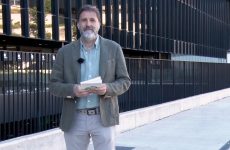


 Excerpt </strong></em>by <a href="https://relatosdelahistoria.com/wordpress-felizmente-alojado-en-webempresa/" target="_blank" rel="noopener">Marcelino Lominchar</a> (2026).
History has a weakness for irony. One of those ironies wore a mustache, was named Félix de Azara, and was born in 1742 in the plains of Barbastro, in Aragón. A military engineer, cartographer, self-taught naturalist, and pioneer of modern biology. Does that ring a bell? No. Fair enough.
Azara was not born to conquer worlds. At first, his job was to measure things: distances, bearings, coordinates. In 1781 he was sent to South America with a clear mission: to draw the border between the Spanish and Portuguese domains in the Southern Cone. A technical, bureaucratic assignment—no glory attached.
The problem was that when he arrived, the Portuguese commission never showed up. And like a good Aragonese, instead of turning back, he stayed. For twenty years.
During that time, he traveled through what are now Paraguay, Uruguay, and Argentina. He drew maps with unprecedented precision and catalogued more than four hundred animal species, many of them unknown in Europe. His works circulated in France, where naturalists such as Cuvier regarded him as one of the finest observers of the eighteenth century. Decades later, a young Charles Darwin read his texts as part of his preparation for the Voyage of the Beagle.
He died in 1821, without monuments or tributes. And yet there was Azara, writing the natural history of a continent—and of a science that did not yet have a name.
---
La historia tiene debilidad por las ironías. Una de ellas lleva bigote, se llama Félix de Azara y nació en 1742 en la comarca aragonesa de los llanos de Barbastro. Ingeniero militar, cartógrafo, naturalista autodidacta y pionero de la biología moderna. ¿Te suena? No. Normal.
Azara no nació para conquistar mundos. Lo suyo, en principio, era medir cosas: distancias, rumbos, coordenadas. Lo mandaron a América del Sur en 1781 con una misión clara: trazar la frontera entre los dominios de España y Portugal en el Cono Sur. Un encargo técnico, burocrático, sin gloria.
El problema es que, al llegar, Azara se encontró con que la comisión portuguesa no aparecía. Y como buen aragonés, en lugar de volverse, se quedó. Veinte años.
Durante ese tiempo recorrió lo que hoy son Paraguay, Uruguay y Argentina. Dibujó mapas con una precisión inédita y catalogó más de cuatrocientas especies de animales, muchas desconocidas en Europa. Sus obras circularon por Francia, donde naturalistas como Cuvier lo consideraron uno de los mejores observadores del siglo XVIII. Décadas después, un joven Charles Darwin leyó sus textos como parte de su formación previa al “Viaje del Beagle”.
Murió en 1821, sin monumentos ni homenajes. Y sin embargo, allí estuvo Azara, escribiendo la historia natural de un continente y de una ciencia que aún no tenía nombre.)


Julián Trigo – Director Corporate Business Development | Admissions Exponential Learning. IE Executive Education.
Reading:
Stories from Spain’s Counter-History (Historias de la contrahistoria de España) Excerpt by Marcelino Lominchar (2026).
History has a weakness for irony. One of those ironies wore a mustache, was named Félix de Azara, and was born in 1742 in the plains of Barbastro, in Aragón. A military engineer, cartographer, self-taught naturalist, and pioneer of modern biology. Does that ring a bell? No. Fair enough.
Azara was not born to conquer worlds. At first, his job was to measure things: distances, bearings, coordinates. In 1781 he was sent to South America with a clear mission: to draw the border between the Spanish and Portuguese domains in the Southern Cone. A technical, bureaucratic assignment—no glory attached.
The problem was that when he arrived, the Portuguese commission never showed up. And like a good Aragonese, instead of turning back, he stayed. For twenty years.
During that time, he traveled through what are now Paraguay, Uruguay, and Argentina. He drew maps with unprecedented precision and catalogued more than four hundred animal species, many of them unknown in Europe. His works circulated in France, where naturalists such as Cuvier regarded him as one of the finest observers of the eighteenth century. Decades later, a young Charles Darwin read his texts as part of his preparation for the Voyage of the Beagle.
He died in 1821, without monuments or tributes. And yet there was Azara, writing the natural history of a continent—and of a science that did not yet have a name.
—
La historia tiene debilidad por las ironías. Una de ellas lleva bigote, se llama Félix de Azara y nació en 1742 en la comarca aragonesa de los llanos de Barbastro. Ingeniero militar, cartógrafo, naturalista autodidacta y pionero de la biología moderna. ¿Te suena? No. Normal.
Azara no nació para conquistar mundos. Lo suyo, en principio, era medir cosas: distancias, rumbos, coordenadas. Lo mandaron a América del Sur en 1781 con una misión clara: trazar la frontera entre los dominios de España y Portugal en el Cono Sur. Un encargo técnico, burocrático, sin gloria.
El problema es que, al llegar, Azara se encontró con que la comisión portuguesa no aparecía. Y como buen aragonés, en lugar de volverse, se quedó. Veinte años.
Durante ese tiempo recorrió lo que hoy son Paraguay, Uruguay y Argentina. Dibujó mapas con una precisión inédita y catalogó más de cuatrocientas especies de animales, muchas desconocidas en Europa. Sus obras circularon por Francia, donde naturalistas como Cuvier lo consideraron uno de los mejores observadores del siglo XVIII. Décadas después, un joven Charles Darwin leyó sus textos como parte de su formación previa al “Viaje del Beagle”.
Murió en 1821, sin monumentos ni homenajes. Y sin embargo, allí estuvo Azara, escribiendo la historia natural de un continente y de una ciencia que aún no tenía nombre.